
CASA Supports Kids
Giving Kids a Voice
Court Appointed Special Advocates help hundreds of abused and neglected children in Sioux Falls every year, by providing a trusted adult and a voice during difficult times.
Last year, nearly 600 kids in Sioux Falls found themselves in uncertain circumstances.
Kids who didn’t have food at home, or where the electricity was turned off. Houses infested with bed bugs or cockroaches. Sleeping on the living room floor, with strangers coming in and out at all hours.
Wondering where mom or dad was, or if they were coming back.
For more than 30 years, volunteers have helped kids like these navigate what comes next. Court Appointed Special Advocates, or CASA, are trained volunteers who step in at the exact moment when kids need someone to help them.
Maybe a parent has been put in jail, or someone called Child Protective Services and the child’s home was deemed unsafe. Maybe there was abuse, substance misuse or neglect.
Whatever the cause, a child doesn’t always understand why they’re being taken away from their parents – and they aren’t sure what happens next.
Stacey Tieszen, executive director of Sioux Falls Area CASA, said it’s in these heartbreaking moments that volunteers are desperately needed to shepherd kids through lengthy court processes, placement in foster care and confusion.
“We are here to help kids who are experiencing abuse and neglect,” Tieszen said. “We formed to help kids figure out what’s going on and to advocate for what’s in the best interests of the child.”
Sometimes that means helping mom or dad get back on track – challenging when families are facing multiple obstacles – from homelessness to criminal history to mental illness. Any one of those could derail a family.
But data from CASA shows families face nearly five obstacles on average, indicating cases are growing in complexity. CASA has enough volunteers to provide an advocate in about half of all cases.
“We don’t know what happens behind closed doors, but kids deserve to be loved and nurtured at all ages,” Tieszen said.
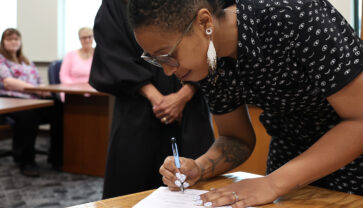
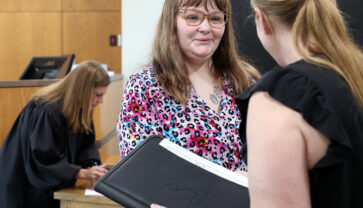
CASA volunteers are sworn in
For more than 30 years, specially trained volunteers have helped local kids during some of their most vulnerable moments.
When CASA steps in, volunteers meet with families and the other people working with them – teachers or counselors or attorneys – and help the child navigate what’s going on while also being a steady presence.
A shortage of foster homes means a child might be placed in one with multiple other children in foster care, who also have experienced trauma.
“There’s a lot of chaos, and kids don’t know what’s going on because they were just living what they thought was a normal life, and then someone came and put them in a police car and took them away from mom and dad,” Tieszen said. CASA volunteers can help make sense of what’s happening – and build trust for kids who aren’t used to having someone focus on their needs.
Volunteers try to help parents make progress – success doesn’t look the same for everyone, but the goal is to reunite families.
“We want these kids to be able to go back home with mom and dad, but it has to be safe, and it has to be a place where those kids can grow,” Tieszen said. “We want a permanent, safe plan. We want to give parents an opportunity to right their ship. If moms and dads are learning the skills and getting the help they need, these kids might actually make it, and they may be cycle breakers.”
About half of the kids CASA serves are reunited with their families. The other half don’t have a safe home or other safe relatives to return to and end up in foster care.
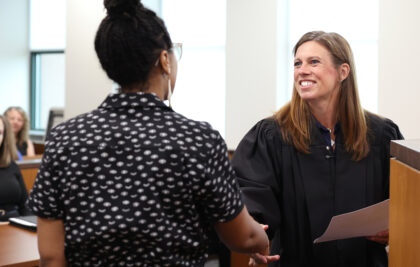
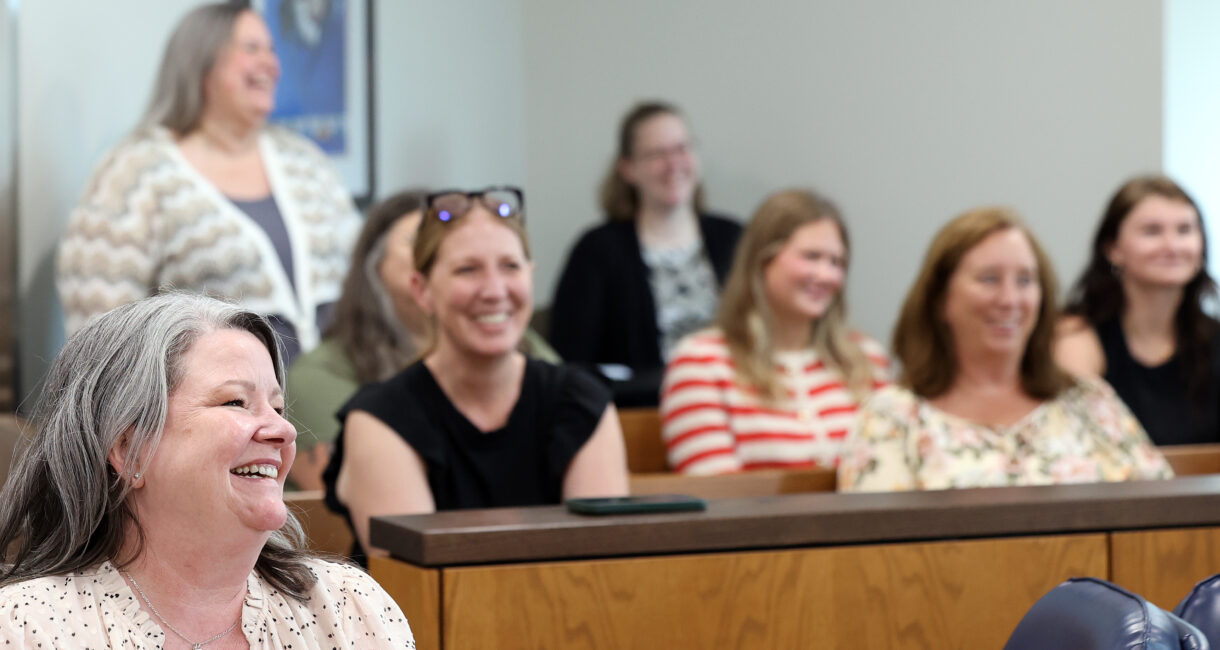
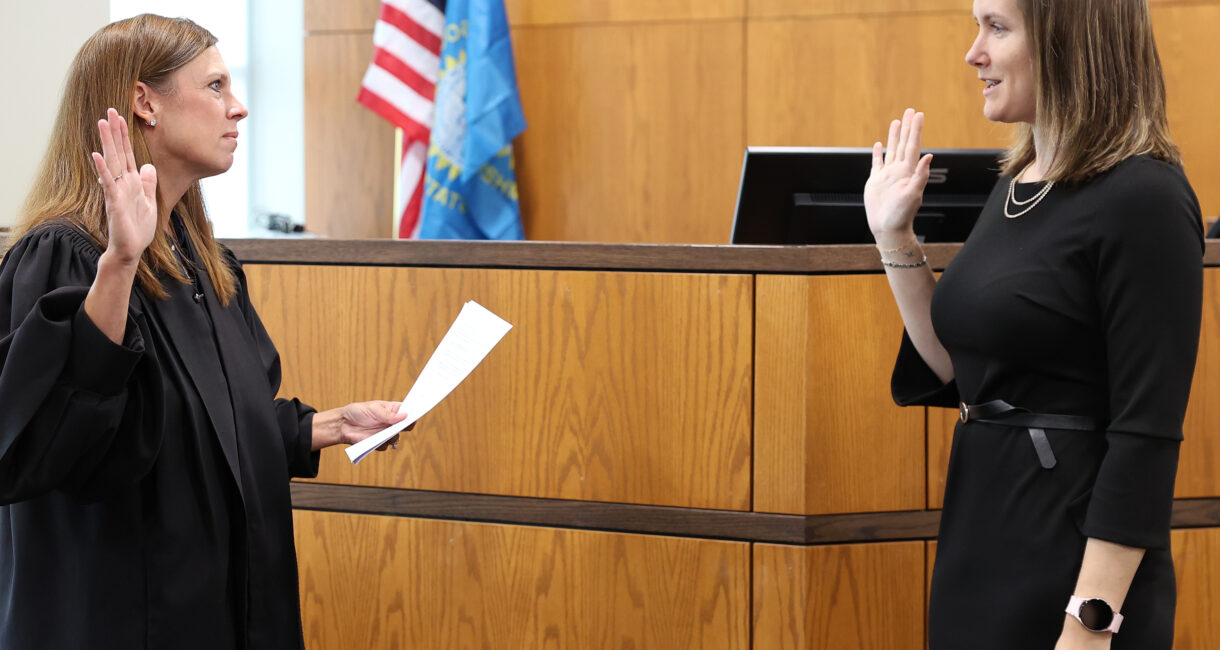
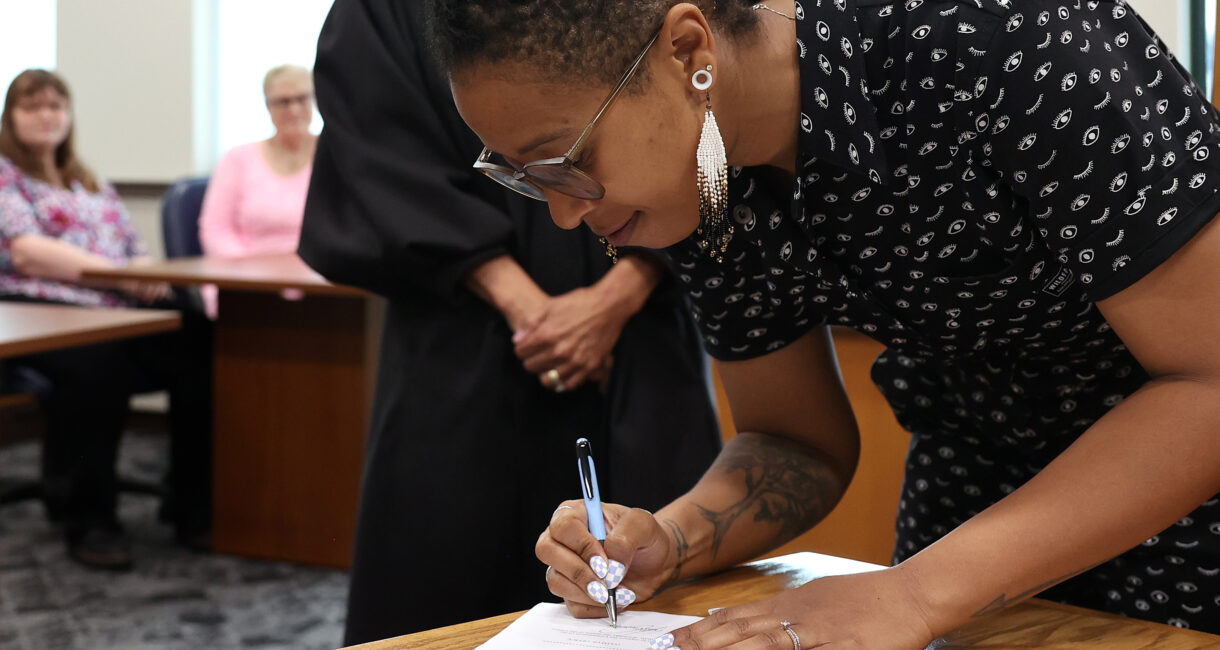
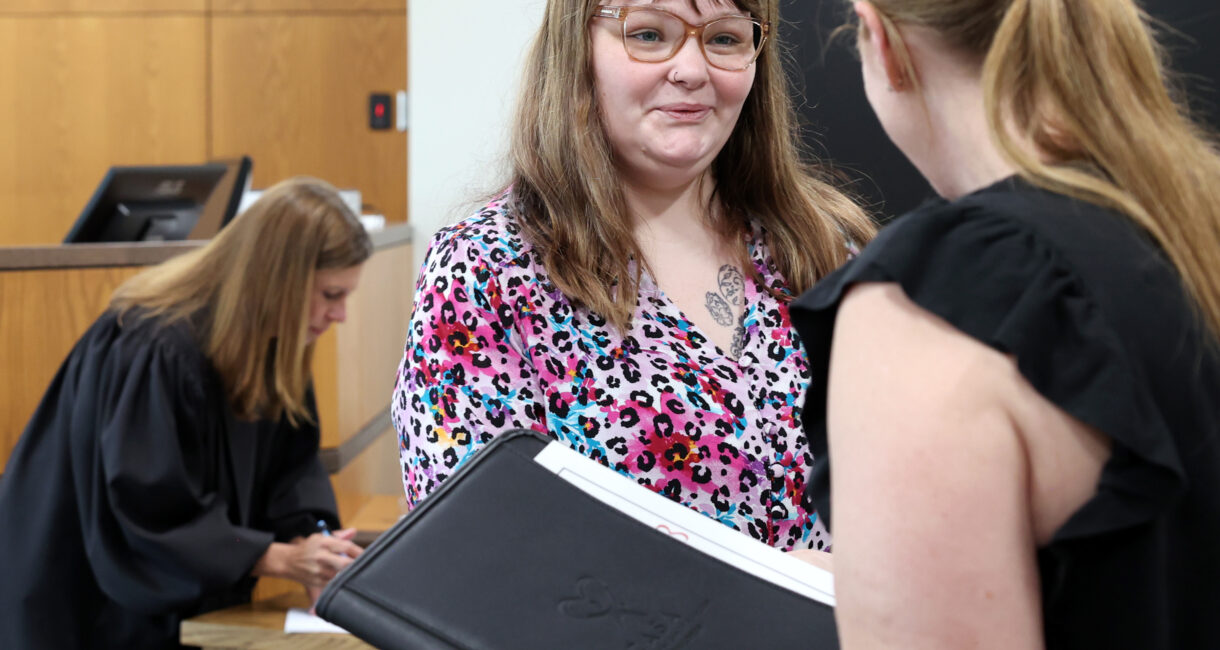
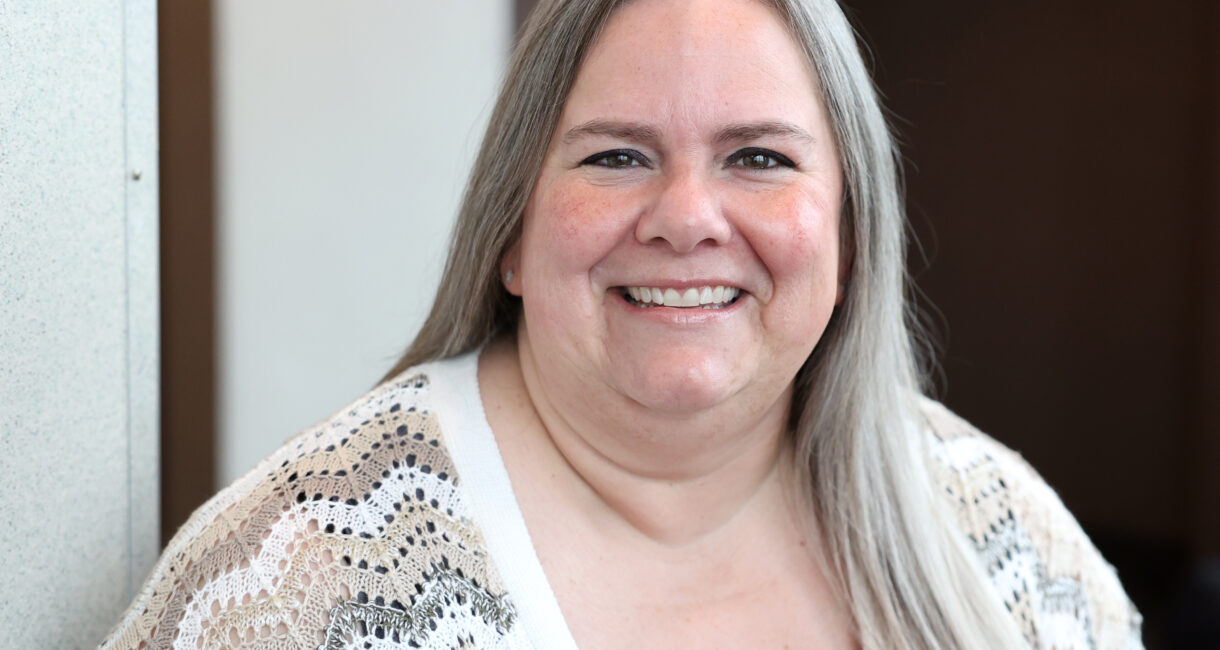
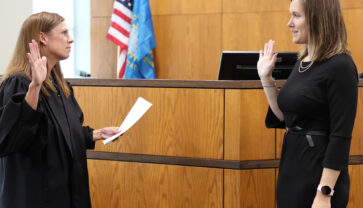
Recently, the latest class of CASA volunteers were sworn in by Judge Robin Houwman, presiding judge for the 2nd Circuit. The volunteers become the eyes and ears of the court, solely focused on the child’s well-being, she said.
Houwman has witnessed the importance of CASA and the role they play for the child and the court.
“The CASA volunteer is truly the one constant for a child who is going through this, and who has been removed from their home,” Houwman said.
She said the volunteers will make meaningful connections with the kids they help, and shared a story of one volunteer attending the military installation for a young man he once served.
Or another story, of a boy who has had nearly a dozen placements over the course of a year – moving from foster home to juvenile detention and other services. “The one constant for him is his CASA volunteer,” Houwman told the group. “It’s someone he knows, and he knows will show up for him.”
The volunteers were each sworn in, proudly standing before Houwman with their right hand raised. After, she told them again how important they are as the courts determine what’s best for a child. “You are here solely to connect with these children, support them and then advocate for them,” she said.
Philanthropy strengthens CASA’s work in several ways, from the organization’s endowment held at the Foundation to generous donors who are passionate about helping children succeed, said Patrick Gale, vice president of community investment for the Community Foundation.
“Support for CASA from donors who give through the Foundation reflects how deeply people care about protecting and advocating for our most vulnerable children,” Gale said. “While the stories are heartbreaking, these volunteers also provide hope that a steady presence and faith in the future can help children and families break the cycles they’re in.”
Tieszen said the ultimate goal is to show kids what healthy relationships look like.
“CASA changes lives, not only for volunteers, but for kids. Kids can see what a healthy, consistent adult looks like, and what it means when someone says they’re going to show up and then really does,” Tieszen said. “For those kids, it can be life-changing. These children we’re serving can choose a different path, and I have every hope that will happen.”
Dave Hunhoff has been a CASA volunteer for about seven months. Before that, he spent nearly 40 years in the sheriff's office in Yankton.
“A lot of us take for granted growing up in a loving and nurturing family,” Hunhoff said. These kids don’t have that. I have a lot of empathy for these kids, partly because of the work I did for a living. They need someone they can count on. It’s a different perspective than law enforcement.”
He currently advocates for a preschool-aged child. Hunhoff has visited with the child at daycare and foster homes. They like to read books, and the child calls him “Play Doh Dave” because that’s what he brings to play with.
“Kids at different ages need different things, but they always need support and they need a voice,” Hunhoff said. “We let the court know how the kids are doing. Our training really teaches us to see a situation from the person’s point of view – the mom or dad or the child. I’m not a counselor. I’m an encourager.”