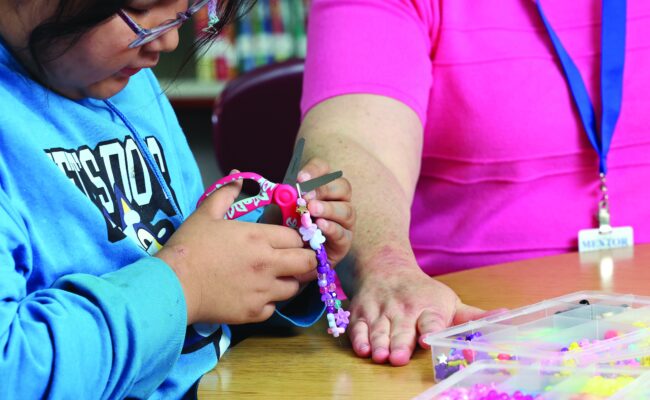
Sioux Falls school-based mentoring program looking to grow
The school-based mentoring program is hoping to bring more mentors to three underserved elementary schools in Sioux Falls.
Read More
People want their voices heard and their stories told.
They want their communities represented, their dreams shared and their burdens lifted.
It’s a universal desire for connection, and it’s one that South Dakota Public Broadcasting takes seriously.
“Not everyone watches PBS or listens to NPR,” said Julie Overgaard, executive director. “But everybody needs basic services for public safety or open government or local news or to hear stories about us, about South Dakotans. We don’t serve everybody in the same way.”
South Dakota Public Broadcasting has been telling community stories since the 1920s, when they began as a radio station. Television followed in the 1950s, and by the 1970s they had broad coverage across the state, adding more radio stations and a television station in Sioux Falls.
Today – between television and radio – South Dakota Public Broadcasting reaches about 96% of South Dakota, with nine television stations and a dozen radio stations. Considering the state’s massive footprint and isolated rural areas, that’s no easy feat.
It’s what you might expect from public broadcasting – children’s programming, dispatches from all four corners and the space in between, and coverage of state government. After the terrorist attacks of Sept. 11, 2001, they began taking a larger role in public safety. Because of their ability to reach so much of the state – in a way that doesn’t require an internet connection – they became a go-to for sharing emergency information.
“Whether it’s weather or weather-related public safety, or Amber alerts and other public safety measures, SDPB is designated with the state of South Dakota as the organization for making sure the public is aware of that,” Overgaard said.
For Overgaard, that’s an important distinction, and one that not only separates SDPB from other media outlets in the state, but from other public broadcasting stations across the country.
“If cell phones go down in an emergency – and they do – we can still function, and we can still provide people all across the state with whatever information they need, even in the event of a catastrophic internet breakdown,” she said.
Part of it came after major regional disasters like the Spencer tornado and a fire in the Black Hills, where reliable communication to residents was paramount.
“We had a few things happen in a row, and it really sparked the state government to say, how are we going to do this better? It helped create what we now call our state radio network, which is a way for first responders to talk to each other.”
SDPB has been funded through state and federal funding and philanthropy. When federal dollars were recently removed, the community rallied to support SDPB, Overgaard said.
“We have received gifts from nearly every state in the nation, and every county in South Dakota, and it has been so heartening,” Overgaard said. The outpouring of support was a reminder that people believe in the work of SDPB.
It’s part of how things are done in South Dakota, partnerships that build bridges to rural areas and an attitude that working together is the best way to get things done in the state, she said.
“Everyone in South Dakota benefits from what we do in public safety and the work we do in open government, regardless of if they’re a fan of British comedies or Sesame Street,” Overgaard said.
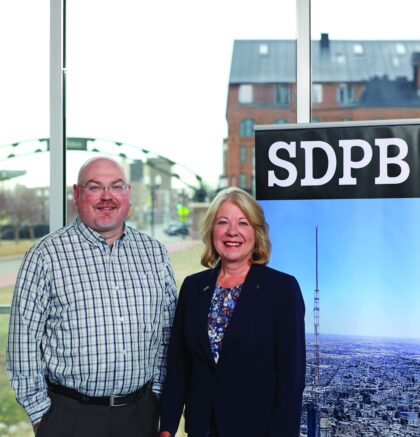
The Friends of SDPB, the nonprofit arm that supports the organization, was created in the 1970s as a way for the public to support the work and allow for some flexibility and autonomy.
“I don’t think we would have navigated and come out as successfully as we have in recent years if it weren’t for the public support,” said Ryan Howlett, CEO of Friends of SDPB.
Opening an office in Rapid City and downtown Sioux Falls – across from Jacobson Plaza along Phillips Avenue – helped increase visibility for SDPB. Telling stories on the radio or through television is one-way communication, Overgaard said. Having space to bring people together in person, to open a community conversation on a topic in the heart of a city allows for a deeper level of involvement.
“When you can make those kinds of connections with people, then they’re your friends for life,” Overgaard said.
It helps when people can see themselves in the content SDPB produces. That, Overgaard said, is what keeps people engaged. “When donors reach out to us, or we hear from them, it’s all about local programming. People want to see themselves reflected in the place they live,” Overgaard said.
The Community Foundation holds an endowment for Friends of South Dakota Public Broadcasting.
“We’re grateful that the Friends of SDPB trusts us with their endowment,” said Patrick Gale, vice president of community investment. “The work that SDPB does is important not only to Sioux Falls, but to the rest of our state. The endowment provides annual support and ensures the sustainability of their work and telling the stories of the people who live here.”
Overgaard said local journalists telling local stories inspire trust in not only their sources but their audience.
“We need to tell South Dakota or Midwest stories in our own voices, from living and being here,” she said. “People are proud to be South Dakotan, but they’re even more proud to be from Sioux Falls, or Parker or Tea. Their town is still their fundamental identity.”
“People can say, ‘oh, I can take that idea and use it in my community, or my school or on my ranch,’” Overgaard said. “That’s the benefit of great storytelling and picking the right topics. The more we can do to bring us together around the things we share and to problem-solve around common issues, then the better chance we have of building a better state.”
The school-based mentoring program is hoping to bring more mentors to three underserved elementary schools in Sioux Falls.
Read More
Abbott House is raising money to build two more intensive foster care homes in Sioux Falls that help transition young adults from foster care to independence.
Read More