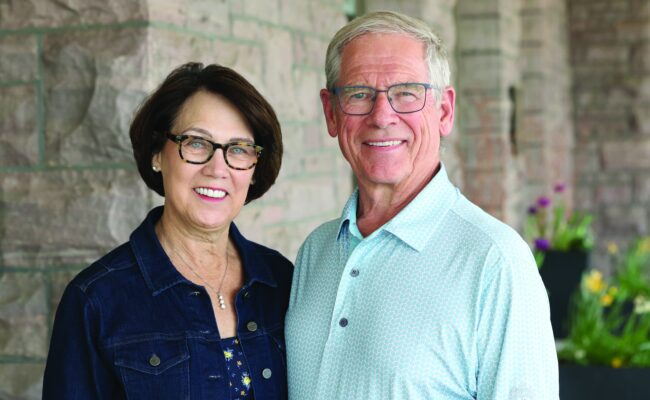
Giving back creates 'joyful feeling' for Greg and Karen Schultz
Greg and Karen Schultz credit their families for modeling generosity in their lives.
Read More
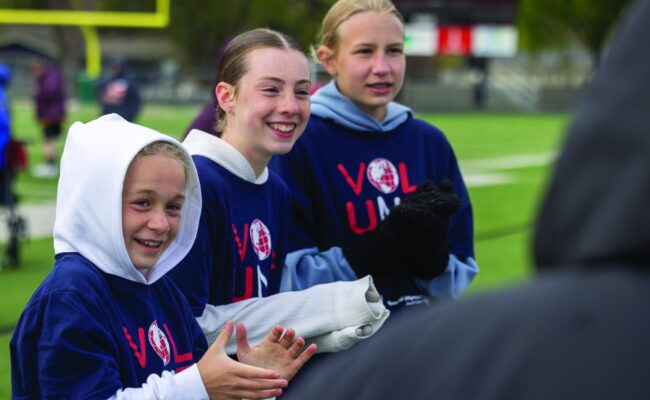
If you want to witness joy in action, consider standing at the finish line of a Special Olympics race.
Or watch athletes throw the javelin.
Or marvel at the small tent cities that popped up outside of the Brandon High School stadium in early May, when hundreds of South Dakota athletes checked in to spend the morning competing.
The dreary, rainy day didn’t dampen anyone’s spirits – from the cheerful volunteers to the supportive families and the runners, walkers and throwers, lining up at each event to give it their all.
Kelly Keiser has four sons, and all of them compete.
Her oldest is 26 years old, and he’s been an athlete since age 10.
“Chris loves sports, and he really wanted to play basketball, but he struggled to keep up with his peers,” Keiser said. “So, we found Special Olympics, and it’s been a huge part of our lives ever since.”
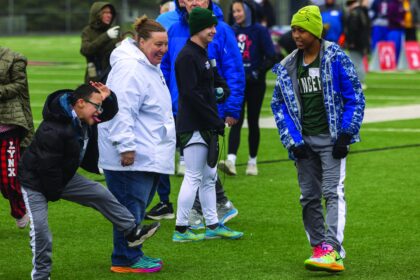
Keiser said her sons have made lifelong friends, and she’s connected with so many other families, offering a network of support.
“It’s just an amazing organization that offers so many opportunities for these athletes to thrive,” Keiser said. “My boys have absolutely blossomed. They can do anything anyone else can do – it just looks a little different.”
One son, when he first started competing, would sit down mid-race because he was tired. Now he’s able to do the whole thing, and he’s excited about it, she said.
Nick Moen, CEO of Special Olympics South Dakota, said about 2,000 athletes compete in the state. It’s a number that keeps growing, after a dip during the pandemic.
“We are seeing younger athletes, too, and our young athlete program is for kids ages 2 to 7. That’s the future of our organization,” Moen said. “Special Olympics South Dakota is a place to bring athletes and families together.”
Special Olympics has an endowment at the Community Foundation, which helps provide operational support for the organization.
“An endowment can provide stability for nonprofits, and we’re grateful that Special Olympics trusts us to manage and steward those funds,” said Mary Kolsrud, chief philanthropy officer with the Community Foundation. “The stories of their athletes are so inspiring, and we’re grateful for the work they do across the state.”
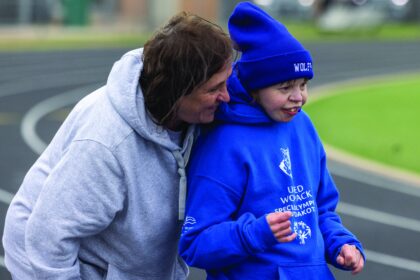
Libby Pfeifer is 33. She’s nonverbal, according to her dad, Scot. She competed for about a decade and then took a break. The spring track meet was one of her first events competing again.
“She loves it. She’s so happy,” her mom, Starla, said. “It’s an opportunity for folks with special needs to grow. And it does mean a lot to them. They’re competitive and they like to be with their peers.”
Libby finished her 50-meter walk, cheered on by the volunteers and other families.
Moen said the program provides a variety of services. “Special Olympics is known in general as a sports organization, but we are so much more than that. We have the unique ability to bring people together from all across the state, introduce them to the power of movement and community, and build lasting friendships along the way.”
That’s true for Jaren Keiser, 22.
He’s been competing since 2010. He’s a multisport athlete, competing in swimming, track, softball, bowling and more. But track is his favorite.
“I just love running,” Jaren said. “Running is my coping mechanism. And so, competing means the world to me. I love it.”
He’s made friends across the country, both through events and also by serving on various committees.
“It’s made me who I am today. In 2022, I was afraid to do this, but I went to Florida to represent South Dakota, and since then, I’ve been able to step out of my comfort zone,” Jaren said. “Special Olympics makes it so you can really be yourself.”
Greg and Karen Schultz credit their families for modeling generosity in their lives.
Read More
Joe Foss students find healing through art therapy and community show.
Read More